Candidate: Scott Hattrup
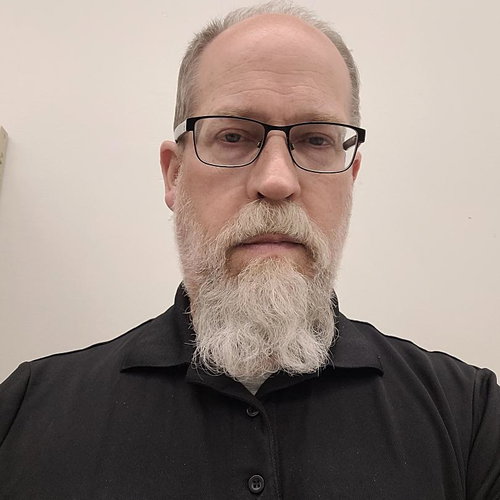
Scott Hattrup
Lenexa, KS
I earned a bachelor's degree in three years, and then worked in the automobile business selling new and used cars, fleet and wholesale, and served as the inventory ordering manager at a couple dealerships before deciding to go back to school. I earned my juris doctorate at the University of Kansas, and then spent almost 15 years practicing law, where I also worked as a grassroots lobbyist for good gun laws. During that time, I was introduced to competitive shooting, became an NRA firearms instructor, and served on the boards of some local shooting ranges and USPSA clubs. I then spent a few years selling guns, repairing them, and being a licensed manufacturer. Needing more reliable income, I first went into transportation jobs, and then moved into business management. I have been a manager for a national auto parts chain for the last couple years and am responsible for scheduling employees, controlling expenses, satisfying customers' needs, and collaborating with higher management on how we can improve our stores. I became involved with USPSA in 2001, attending the first Factory Gun Nationals, and several sectional, area, and national matches over the next few years. I participated in the Points Series matches during those early years and won some class titles in Production and Revolver. I grew to respect the volunteer ROs who helped run those matches, and became certified myself in December 2004. I served as the match director for Area 3 in 2005 and 2006. I have since become a Chief Range Officer in USPSA, and also in IROA, spending most of my time at level 3 matches the last few years. I have been at matches in 37 states, Canada, Argentina, Sweden, and Jamaica. I have also served as the Kansas Section Coordinator for over 15 years.
1. What motivates you to serve as a USPSA Area Director?
I have served as a board member for two USPSA clubs, a shooting range, a Kansas City based gun collectors' association, and for the National Association of Arms Shows. I currently serve as the Kansas Section Coordinator, and as a Chief Range Officer for USPSA, and for the International Range Officers Association for IPSC (one of only six US officials). While working the various matches I have been fortunate to attend over the last several years, I have had conversations on and off the range with shooters at all levels how we can improve our sport or the organization as a whole. I believe that through continuing those conversations both in and outside Area 3, I can bring that collective wisdom to the board discussions, and will endeavor to work in the organization's best interests.
2. What actions have you taken to support and grow USPSA in your area prior to your candidacy?
I previously served as a board member for two local USPSA clubs. During that time, I encouraged the weekly indoor club to replace a mandatory formal once-monthly shooter orientation with a one-on-one walkthrough program to encourage new shooters to actually shoot, and come back the following week. I encouraged our monthly outdoor club to do away with the private classification system that was developed and run in secrecy by a long-term older member who did not like the USPSA system. By using the USPSA classification system, the membership and attendance increased, as well as participation in state, area, and national championships that would not have been available or encouraged to non-members. In more recent years since I have been serving as the Section Coordinator, I have encouraged the clubs that are awarded nationals' slots to issue them to the members that will use them, and have given the most in their participation on behalf of the club in setting up and running matches. Those clubs both now have several master and grand master shooters where they previously only had one GM, and two older masters.
3. What relevant experience or qualifications do you bring to the role of Area Director? (Include both volunteer and professional experience.)
In my professional life, I am currently a general manager for a $1.0M+ annual revenue store in a national auto parts chain. I have to schedule employees within allotted hours, not exceed expected payroll expenses, reduce other controllable expenses, increase income through professional and DIY customer service, and monitor periodic P&Ls issued to ensure positive growth. In my prior work as an attorney, I appeared at court, advised and advocated for clients, and served on various boards. I have presented lobbying proposals for positive gun laws in Topeka, educated fellow attorneys on firearms laws in continuing legal education presentations, and have presented seminars to attendees at the Gun Rights Policy Conference and a group of FBI/BATF agents on gun show laws and firearm transaction laws. I have served on a board for the National Association of Arms Shows to discuss strategies for responding to Clinton-era proposed restrictions on guns and gun shows, and for potential positive lobbying once the administration changed. I have served as a fiduciary member of boards and know what it means to put aside my own personal interests to work for the best interests of the organization as a whole. During the organization's most recent lawsuits, I have offered advice to some of the then area directors for strategies to resolve the suits in a way most favorable to the organization.
4. Based on your review of the USPSA bylaws, what are the responsibilities of an Area Director, and how do you plan to execute them?
I am supposed to represent the members of Area 3 who elected me, and bring their concerns to the board. I should respond to questions promptly and professionally, answering what I can from publicly available information or discussions. I also need to act as a fiduciary for the organization, putting USPSA's interests ahead of my own, and to avoid conflicts of interest that would prevent me from giving proper advice or opinions in board discussions or votes. I should also be reasonably well informed on issues before the board in our regular meetings.
5. What are the top three challenges facing USPSA right now, and what would be your approach to addressing them as an Area Director?
1) The organization is perceived by some as lacking credibility on financial discussions due to incomplete information being released on social media by sources within leadership, and by a public lawsuit that is being presented as an attempt to gain financial transparency. I would encourage the board to publish audited or final financial data (match budget/actual expenditures) within 60-90 days of match end. 2) The organization is perceived by some as attempting to silence dissent through removal of members in suspensions or otherwise. Newer board members have attempted to resolve this issue by establishing a reinstatement process. I support those efforts and would be open to formalizing a process by which the board could appoint a review committee with a director and experienced members to consider the reasons for the suspension and to review a potential appeal. 3) We have recently grown to the largest number of active members we have ever had as an organization. Local clubs have record numbers of new or renewing shooters, and many are doing well with volunteerism as well. Some area matches and the nationals lack staff and volunteers though. I would encourage a national volunteer survey to answer these concerns.
6. How will you support clubs, section coordinators, and members in your Area? How will you contribute to member recruitment and retention?
A prior Area 3 director developed an email notification system for all the section coordinators, and conducted regular video calls to encourage and answer questions. I will resume that activity on a regular basis, and will increase the frequency of contact if important issues start to come up. I will encourage the section coordinators to establish a similar contact system for their clubs, and will encourage questions both down and up the chain. I will also consult with the USPSA Managing Director and Marketing to come up with a spread sheet we can use in each section to monitor the health and membership of each club using activities reported, and other things as permitted like total number of members in each club, Y2Y membership growth or drop, etc. I would share that spreadsheet and relevant questions or answers we discover with the other areas as well.
7. How will you ensure that your decisions as a Board member represent the interests and concerns of members in your Area?
I intend to regularly communicate via email and conference call with the section coordinators in Area 3 to discover their opinions, and member opinions on issues of concern. If regular questions are coming frequently on the same or similar topics, I will send a newsletter/survey back on the issues raised. I will also encourage members to contact me directly if they have concerns, and will endeavor to respond promptly and professionally to all questions raised.
8. Are there any other specific issues you would work to address as Area Director?
I would like to work on formalizing a reinstatement process, especially given the history of the organization the last few years. There is still a perspective among some of the more experienced members in Area 3 that dissent can be met with suspension or removal. Having a reinstatement process available that a member could choose to follow will quiet many of those concerns and gives an avenue to potentially prevent future litigation against the organization and the associated financial hit that defending even unsuccessful lawsuits brings.
9. If not elected, how do you plan to continue contributing to USPSA and your Area?
I will remain as the Kansas Section Coordinator, and will continue to work at least one USPSA level 3 match each year, and at least one IPSC level 3 match each year. I will also continue to offer advice to other area directors when requested, or if I feel it will be helpful to the organization.
I have served as a board member for two USPSA clubs, a shooting range, a Kansas City based gun collectors' association, and for the National Association of Arms Shows. I currently serve as the Kansas Section Coordinator, and as a Chief Range Officer for USPSA, and for the International Range Officers Association for IPSC (one of only six US officials). While working the various matches I have been fortunate to attend over the last several years, I have had conversations on and off the range with shooters at all levels how we can improve our sport or the organization as a whole. I believe that through continuing those conversations both in and outside Area 3, I can bring that collective wisdom to the board discussions, and will endeavor to work in the organization's best interests.
2. What actions have you taken to support and grow USPSA in your area prior to your candidacy?
I previously served as a board member for two local USPSA clubs. During that time, I encouraged the weekly indoor club to replace a mandatory formal once-monthly shooter orientation with a one-on-one walkthrough program to encourage new shooters to actually shoot, and come back the following week. I encouraged our monthly outdoor club to do away with the private classification system that was developed and run in secrecy by a long-term older member who did not like the USPSA system. By using the USPSA classification system, the membership and attendance increased, as well as participation in state, area, and national championships that would not have been available or encouraged to non-members. In more recent years since I have been serving as the Section Coordinator, I have encouraged the clubs that are awarded nationals' slots to issue them to the members that will use them, and have given the most in their participation on behalf of the club in setting up and running matches. Those clubs both now have several master and grand master shooters where they previously only had one GM, and two older masters.
3. What relevant experience or qualifications do you bring to the role of Area Director? (Include both volunteer and professional experience.)
In my professional life, I am currently a general manager for a $1.0M+ annual revenue store in a national auto parts chain. I have to schedule employees within allotted hours, not exceed expected payroll expenses, reduce other controllable expenses, increase income through professional and DIY customer service, and monitor periodic P&Ls issued to ensure positive growth. In my prior work as an attorney, I appeared at court, advised and advocated for clients, and served on various boards. I have presented lobbying proposals for positive gun laws in Topeka, educated fellow attorneys on firearms laws in continuing legal education presentations, and have presented seminars to attendees at the Gun Rights Policy Conference and a group of FBI/BATF agents on gun show laws and firearm transaction laws. I have served on a board for the National Association of Arms Shows to discuss strategies for responding to Clinton-era proposed restrictions on guns and gun shows, and for potential positive lobbying once the administration changed. I have served as a fiduciary member of boards and know what it means to put aside my own personal interests to work for the best interests of the organization as a whole. During the organization's most recent lawsuits, I have offered advice to some of the then area directors for strategies to resolve the suits in a way most favorable to the organization.
4. Based on your review of the USPSA bylaws, what are the responsibilities of an Area Director, and how do you plan to execute them?
I am supposed to represent the members of Area 3 who elected me, and bring their concerns to the board. I should respond to questions promptly and professionally, answering what I can from publicly available information or discussions. I also need to act as a fiduciary for the organization, putting USPSA's interests ahead of my own, and to avoid conflicts of interest that would prevent me from giving proper advice or opinions in board discussions or votes. I should also be reasonably well informed on issues before the board in our regular meetings.
5. What are the top three challenges facing USPSA right now, and what would be your approach to addressing them as an Area Director?
1) The organization is perceived by some as lacking credibility on financial discussions due to incomplete information being released on social media by sources within leadership, and by a public lawsuit that is being presented as an attempt to gain financial transparency. I would encourage the board to publish audited or final financial data (match budget/actual expenditures) within 60-90 days of match end. 2) The organization is perceived by some as attempting to silence dissent through removal of members in suspensions or otherwise. Newer board members have attempted to resolve this issue by establishing a reinstatement process. I support those efforts and would be open to formalizing a process by which the board could appoint a review committee with a director and experienced members to consider the reasons for the suspension and to review a potential appeal. 3) We have recently grown to the largest number of active members we have ever had as an organization. Local clubs have record numbers of new or renewing shooters, and many are doing well with volunteerism as well. Some area matches and the nationals lack staff and volunteers though. I would encourage a national volunteer survey to answer these concerns.
6. How will you support clubs, section coordinators, and members in your Area? How will you contribute to member recruitment and retention?
A prior Area 3 director developed an email notification system for all the section coordinators, and conducted regular video calls to encourage and answer questions. I will resume that activity on a regular basis, and will increase the frequency of contact if important issues start to come up. I will encourage the section coordinators to establish a similar contact system for their clubs, and will encourage questions both down and up the chain. I will also consult with the USPSA Managing Director and Marketing to come up with a spread sheet we can use in each section to monitor the health and membership of each club using activities reported, and other things as permitted like total number of members in each club, Y2Y membership growth or drop, etc. I would share that spreadsheet and relevant questions or answers we discover with the other areas as well.
7. How will you ensure that your decisions as a Board member represent the interests and concerns of members in your Area?
I intend to regularly communicate via email and conference call with the section coordinators in Area 3 to discover their opinions, and member opinions on issues of concern. If regular questions are coming frequently on the same or similar topics, I will send a newsletter/survey back on the issues raised. I will also encourage members to contact me directly if they have concerns, and will endeavor to respond promptly and professionally to all questions raised.
8. Are there any other specific issues you would work to address as Area Director?
I would like to work on formalizing a reinstatement process, especially given the history of the organization the last few years. There is still a perspective among some of the more experienced members in Area 3 that dissent can be met with suspension or removal. Having a reinstatement process available that a member could choose to follow will quiet many of those concerns and gives an avenue to potentially prevent future litigation against the organization and the associated financial hit that defending even unsuccessful lawsuits brings.
9. If not elected, how do you plan to continue contributing to USPSA and your Area?
I will remain as the Kansas Section Coordinator, and will continue to work at least one USPSA level 3 match each year, and at least one IPSC level 3 match each year. I will also continue to offer advice to other area directors when requested, or if I feel it will be helpful to the organization.
I first became involved in competitive shooting by attending a local police benefit match in the late 1990s that was shot in a modified PPC/bullseye style with time limits for each string, but shot on a firing line. It was recommended by a friend who I had met while working as a grassroots lobbyist in our state capitol on passing concealed carry laws. It was fun, but I wanted more than just a fixed firing line. I later became an NRA Firearms Instructor and started attending training classes with Massad Ayoob, Ray Chapman, Jim Cirillo, Clint Smith, Louis Awerbuck, and others. Most of those instructors encouraged me to become involved in competitive shooting to maintain practical skills, and also to get better solving shooting problems at speed. The most recommended organization to join was USPSA, which was only about 15 years removed from being created as the US region for IPSC, and still had many similar rules, even some officials who crossed over. I determined almost from the beginning that I wanted to be involved as a volunteer with these shooting organizations, and have served on the boards of two grassroots groups in Kansas, my home shooting range, two local USPSA clubs, a gun collector's club in Kansas City, and the National Association of Arms Shows, while it still existed. I have also served as the USPSA Kansas Section Coordinator for a number of years, and stay in touch with other section coordinators in the area, several past area directors, and some past USPSA presidents. I've also given presentations to an NRA committee in Fairfax, VA, a group of FBI and BATF agents on gun laws, and multiple Gun Rights Policy Conferences. I feel fortunate to have met and worked with several knowledgeable people during that time, especially Dave Thomas, the long-time managing director for USPSA, and Neal Knox, the first director of NRA-ILA, long-time NRA board member, and writer. Volunteers working for the collective goal of putting on a match are the heart of our sport, whether that is setting up at a regular club match, or officiating at an annual state championship, one of the eight area matches, one of the prestigious national championships USPSA holds every year, or the international matches that I am privileged to attend. Volunteers organize our local clubs to enable shooters to come attend the regular matches. I see service on the USPSA board as a similar activity to help continue the organization on the path to hold those matches, but also to be held accountable for how it receives and spends the money to do so. I like the efforts the organization has started to be more financially transparent, by posting the IRS-required Form 990s on our web site, and by publishing audited end of year financials referring to the prior year numbers as well. I would also like to see a final version of each national match P&L posted 60-90 days after the match is concluded.
Email Address: [email protected]